“SEO (search Engine Optimisation) is where you focus 100% on ranking in the organic results. SEM (search engine marketing) is when you tap into both SEO and PPC in order to get traffic from search engines”
Google’s search results are divided into two main categories: the paid search results and the organic search results. SEO is where you focus 100% on ranking in the organic results. SEM is when you tap into both SEO and PPC in order to get traffic from search engines.
One of the main differences between SEO and SEM is speed and ……..
SEO improves the visibility of the website.SEM can improve the sales of a small business.SEO offers high value to your website over time.SEM offers immediate results, but it doesn’t stay effective over time.
There is no payment required when a visitor clicks on the search result of SEO. Payment is required when a visitor clicks on the search result of SEM. SEO is not good for testing your website.SEM is good for testing your website.The SEO search result doesn’t target the audience. SEM search result targets the selected audience. In SEO Competition is lesser due to the requirement of organic content.In SEM,Competition is higher in the targeted keywords.The Impact of SEO requires time.SEM impacts are immediate.
Similarities Between SEO And SEM-
- SEO and SEM help to grow a website and improve traffic on it.
- SEO and SEM help brands to appear in the search result.
- Website owners require knowing their audience to use both SEO and SEM.
- They both require regular testing and proper optimization to stay on top.
- They both target specific audiences for specific keywords.
What Is SEO?
The term SEO is a short form of Search Engine Optimization that works to optimize and improve the website visibility on the natural (organic traffic) SERPs or Search Engine Result Pages. In other words, it is beneficial for optimizing the website so it can become highly visible for relevant searches.There are two major types of SEO: the first one is On-page SEO, and the other is Off-page SEO. Hence, both of these types are essential to improve website traffic organically.
On-Page SEO
On the page, SEO is also called on-site SEO because it covers all the on-site techniques that can be employed for assuring the quality of a webpage as per the SERP rankings. Different factors work in the website ranking, such as optimized content, site accessibility, title tags, page speed, keywords, etc.
On-page, SEO uses technical elements and content elements for increasing the webpage quality. Therefore, on-page SEO can generate more traffic to the website by different factors.
These factors are here —-
URL Structure
URL structure plays an essential role in the website’s growth because it allows a search engine for crawling from the page-to-page on the website, making the navigation easier for visitors.
It is good to have a good URL structure, so you need to put keywords in the URL to make it appropriate for organic traffic. URLs must be relevant, short, and easy to understand so that your website can get more visitors.
In URL structure, pillar pages work to improve the website through specific pages dedicated to famous and more searchable topics. Website owners can link different pages in the pillar pages so that visitors can visit those pages as well.
Content
Content is a key factor to attach visitors to the website because engaging and informative content generates more organic traffic as it holds some of the essential aspects of SEO.
Content of the website should be useful and well optimized for the reader. If you are willing to create the best content, then you should follow the instructions given below:
- Content should be specific according to the title and keyword to get more traffic due to the detailed information.
- Content should be unique even from the other pages of the website. It should consist of 500+ words so that the search engine can prioritize your website.
- Use the title and keywords properly because the search engine algorithm works according to the keyword density.
Title Tag
A title tag is a web page title or the main heading of a web page in SERP, so always try to use the targeted keyword in the webpage title. For using keyword properly, you can follow the instructions given below:
- Keep the title of the web page to almost 55-65 characters that include spaces.
- Try to put the keyword at the beginning of the title but don’t stuff the keyword unnecessarily.
Internal Linking
Internal linking of the web pages also plays a vital role in on-page SEO. Linking various relevant web pages of a website is beneficial because it can crawl more and more on search engines and keep visitors engaged with the website. For improving the internal linking of the website, you can follow the below instructions:
- Add or link the relevant and existing content in the new post.
- Try to create relevant content according to the pillar page to link multiple web pages with that pillar page of the website.
- Ensure that you have to link at least 2 to 3 links with every new web page of your website.
Headings
Generally, the search engine gives a little more value to headings compared to other web page text that means search engine algorithms detect the headings for placing a web page in the relevant search.
You must include the target keyword in the headings, but ensure that your heading reflects the web page’s content. For appropriate heading structure, you need to use H1 heading only once and H2 and H3 for other headings.
Meta Description
In on-page SEO, the meta description does not directly impact the on-page optimization because it is a factor that is beneficial for the users so that they can visit the relevant web page. In simple words, the meta description is a short detail that appears at the bottom of the URL in a search engine’s results.
You need to make sure that you create a meta description under 150 characters so that a complete description can be visible in the search results.
Keywords
According to the changes in search engines’ algorithms, keywords are becoming less important now, but keyword optimization is still essential for SEO. For better organic traffic, you need to think about the target audience and their usual searches, then optimize your website’s content according to those keywords and searches.
Images
The image of the website should be well optimized and visible for the visitors of your website. Apart from it, alt text in images also holds an important aspect of content management because these texts keep the website in acquiescence with Web Content Accessibility Guidelines. Ensure that you described the web page image in almost 8 to 10 words and include the keywords in it.
Page Performance
Most of the above on-page SEO factors play a vital role in the structure and quality of the content, but it is essential to improve the performance of the page so that it can take less time and visitors can visit more and more. It is beneficial for the website to enhance the visitor’s experience.
Off-Page SEO
Off-page SEO is a technique to improve the rank of your website in SERPs or Search Engine Results Page. In other words, this technique is beneficial for a website to have more visibility in the search results.According to the comparison of on-page SEO, this SEO technique is not associated with the website and content because it works with different tactics to improve the authority of a website. Off-Page SEO shows the importance of the websites to visitors. There are different factors of off-page SEO.
Link Building-
Link building works as a base of the strategy in off-page SEO because it helps gather an audience for surpassing your competitor’s website rank. As we have mentioned above, off-page SEO aims to create the authority of your business and the position of your website.
In the website ranking process, the search engine algorithm reads the links of a web page and crawls these links to search for web pages and rank them. Before using the linking building on the website, you need to know about the good and bad linking to the website. So, here is a list of good and bad links in off-page SEO.
Good link building:
- Links from the relevant website
- Links must have a relevant anchor text.
- Links should be trusted (without having malware in the link)
- Links should have proper tags.
Bad Link building:
- Links of the comment
- Blog directories
- Article directories
- Forum signatures
Social Media Marketing
Social media marketing plays a vital role in attracting the targeted audience and improving the traffic to your website. You can use social media as a platform to spread your business by reaching potential customers through it.
You need to remember that maintaining strong communication and professional presence on social media platforms is suitable for a website because more and more audiences can know about it through these platforms.
Branding
Branding and promoting a business is a great idea to achieve a targeted audience and make them loyal customers/users of your services. Branding is an important factor of off-page SEO that works to expand the business to reach more and more people and gain more visitors to the website.
Social media marketing and branding helps to spread your website or business to the people for gaining a massive number of visitors/customers.
Customer Reviews
As the name suggests, customer reviews are an opinion of a visitor or a customer of your website so that you can use these opinions to optimize your website for a better user experience. This off-page SEO technique helps you improve your website according to your visitors to crawl better according to the positive customer reviews.
Techniques In SEO:-
There are 3 major types of techniques in SEO that can be used while optimizing a website for better visibility. Let’s understand these techniques briefly.
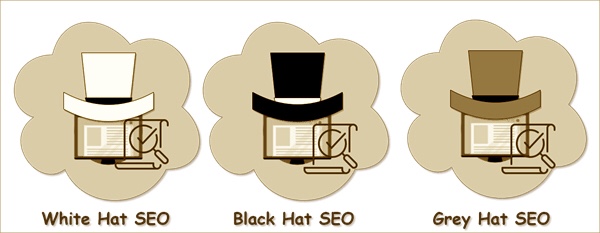
White Hat SEO
This technique works with website optimization strategies, which are approved by Google. In other words, White hat SEO is a technique to improve the search ranking on the result page of a search engine. This SEO technique includes different factors such as:
- Make the website easier to navigate.
- It works under the rules of Google.
- It offers quality and well-optimized content.
- Make a website platform friendly (both mobile and web browser).
Black Hat SEO
It is the opposite of the White Hat SEO because it works against the search engine guidelines. In other words, this technique is used to improve the website ranking by violating the terms and services of a search engine.
This technique in SEO involves different factors such as cloaking, keyword stuffing, and usage of private links. It is used as an unethical way to improve the website traffic on the search engine.
Grey Hat SEO
As its name describes it, a Grey Hat SEO works between White Hat SEO and Black Hat SEO because a website can be optimized using both black hat and white hat techniques. You can use this Grey Hat SEO if your website doesn’t have the 100% fulfillment of Google-approved guidelines for search results.
This technique can improve the ranking of your website without having any negative consequences.
Benefits Of SEO-
- It doesn’t include any paid ads for improving website traffic.
- SEO works to target the quality of traffic for the website.
- It can improve the user experience of your website.
- Improves brand credibility and visibility.
- Works as a long-term strategy for the website.
- Your website gets more clicks than SEM.
What Is PPC ?
Pay-Per-Click advertising or (PPC) means a website owner needs to pay for every visitor coming from or every click generated from the advertisement on the search engine. As you can see in the image below, the search results have some websites with the “Ad” mark on them, which means these website owners are using ads to promote their website on the search engine.
Benefits Of SEM-
- You can reach your target audience instantly.
- Business owners can enhance their brand awareness.
- You can target your audience by optimizing Ads.
- SEM helps to improve traffic by the visibility of the Ad
- You can easily place and maintain ads quicker and easier.
- You have to pay per action.
- SEM can quickly test and measure web page performance.
SEO is search engine optimization that works to improve the visibility of a website and generates organic views. SEM is search engine marketing that also improves the website’s visibility using ads, and website owners need to pay according to the number of clicks on their website’s ads. Hence, there are some essential differences between SEO and SEM.
Thanks for Reading
 EraofGirl
